What I Wish I Knew Before Sending My First Letter at the Post Office
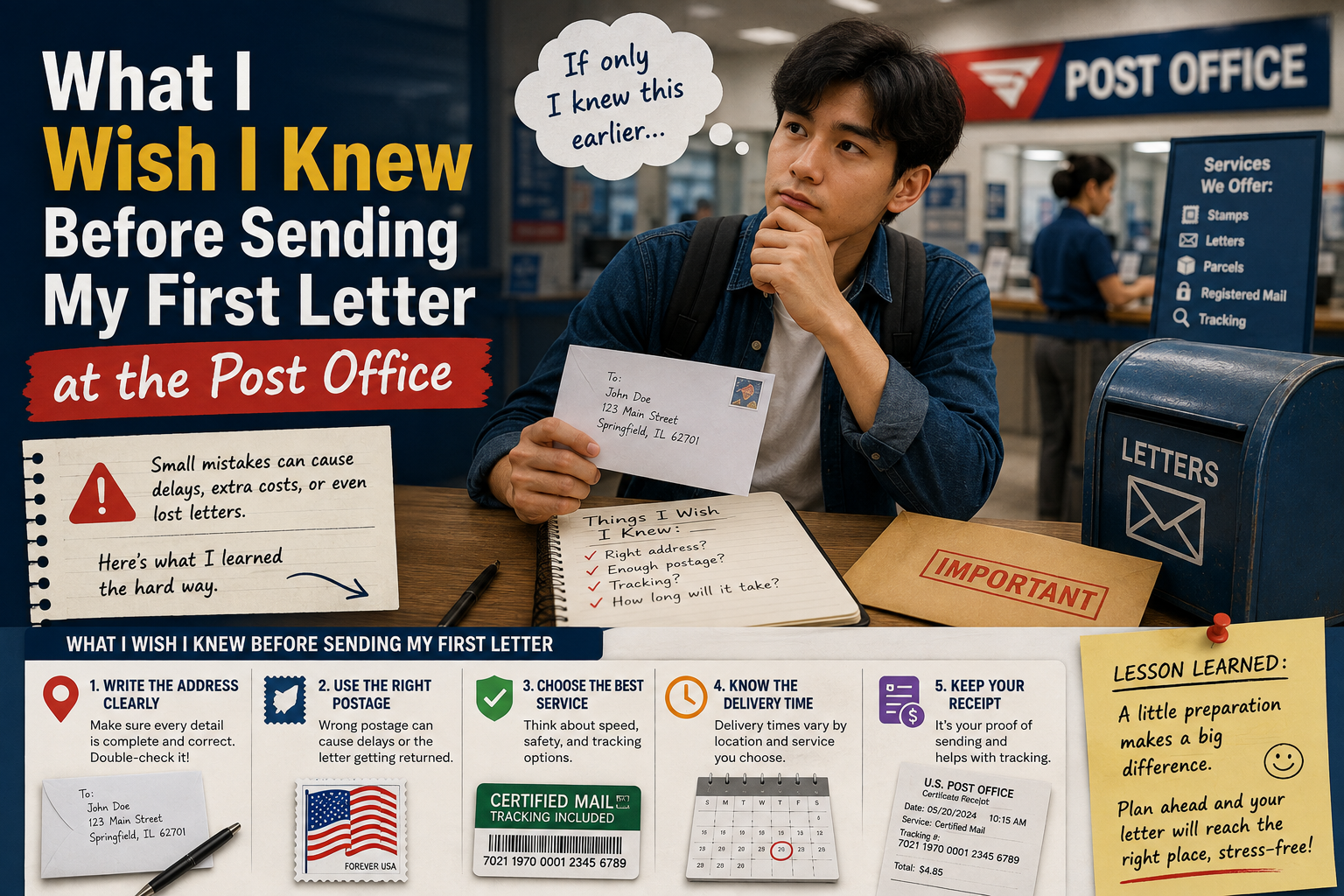
The first time I sent a letter through the post office, I assumed the process would be extremely simple. I thought I only needed to write the recipient’s address, place the letter in an envelope, visit the post office, and pay the required fee.
While the basic process was straightforward, there were several small details I did not know beforehand. Those details made me realize that preparing a physical letter requires more attention than sending an email or instant message.
If you are preparing to send your first letter through a post office, learning from my experience can help make your first visit easier and more comfortable.
I Should Have Checked the Address Earlier
The first thing I learned was the importance of checking the recipient’s address carefully.
Before visiting the post office, I made sure the envelope included the recipient’s name, complete address, city, and postal code. I also included my information as the sender.
What I did not initially realize was how important every small detail could be. A missing apartment number, incorrect street information, or wrong postal code could potentially cause delays or delivery problems.
Today, I always review the address at least twice before sealing an envelope.
I Should Have Prepared the Letter Completely
Another lesson was to prepare everything before arriving at the post office.
I made sure the pages were complete and arranged correctly, but I could have been even more organized. If the letter contains several pages or important documents, it is worth checking the contents carefully before putting them into the envelope.
Make sure the envelope is appropriate for the size and weight of the contents. Avoid overfilling it, as an envelope that is difficult to close may not be ideal for mailing.
Taking a few extra minutes at home can prevent unnecessary problems at the counter.
I Did Not Know There Could Be Different Services
One thing that surprised me was that sending a letter is not necessarily a single-option process.
Depending on the destination and postal provider, there may be different delivery services with varying features, prices, delivery speeds, and tracking options.
Before my first visit, I assumed the staff would simply weigh the envelope and tell me the price.
Instead, I learned that it is useful to explain what you actually need. If the letter is important, for example, you may want to ask whether tracking or additional delivery features are available.
Asking Questions Makes Things Easier
I initially felt slightly embarrassed about asking questions because I thought I should already know how everything worked.
That turned out to be unnecessary.
The postal staff were able to explain the available services and answer my questions. This made the process much easier.
If you are visiting a post office for the first time, do not hesitate to ask about postage, delivery options, tracking, packaging, or anything else you do not understand.
A simple question can prevent a mistake.
I Should Have Kept the Receipt Carefully
After paying for the service, I received a receipt.
At first, I treated it like an ordinary payment slip. Later, I realized that keeping it was important.
Depending on the service, the receipt may contain useful transaction or tracking information. If something needs to be checked later, having the receipt can make the process easier.
Now, whenever I send something important, I keep the receipt until I know the letter has reached its destination.
I Should Have Allowed Enough Time
One of the biggest differences between physical mail and digital communication is the waiting period.
An email can arrive almost instantly. A physical letter needs time to travel through the postal network.
I initially expected the letter to arrive quickly, but I learned that delivery times can vary depending on the destination, service selected, weekends, holidays, weather, and other factors.
If a letter is important or has a deadline, it is better not to wait until the last possible day.
Give yourself enough time for the mailing process.
I Should Have Considered Tracking
For an ordinary personal letter, tracking may not always be necessary. However, for important correspondence, knowing whether an item is moving toward its destination can provide peace of mind.
When sending something valuable or time-sensitive, ask the postal staff whether a service with tracking or delivery confirmation is available.
The extra information can be useful if you need to verify the shipment’s progress.
I Learned to Protect Important Documents
If a letter contains important documents, it is wise to keep copies before sending the originals.
This is a simple precaution that I wish I had considered earlier.
For documents that are difficult or impossible to replace, creating a digital backup can provide an additional layer of protection.
The original document can then be sent while a copy remains safely stored.
Traditional Mail Requires Patience
Perhaps the biggest lesson was learning to be patient.
Sending a physical letter is slower than sending a digital message, but that is also part of its character.
There is something interesting about knowing that a handwritten message is traveling physically from one place to another.
Instead of expecting an immediate response, you have to allow the postal process to take its course.