A Simple Letter, a Long Journey: My Experience Using the Postal Service
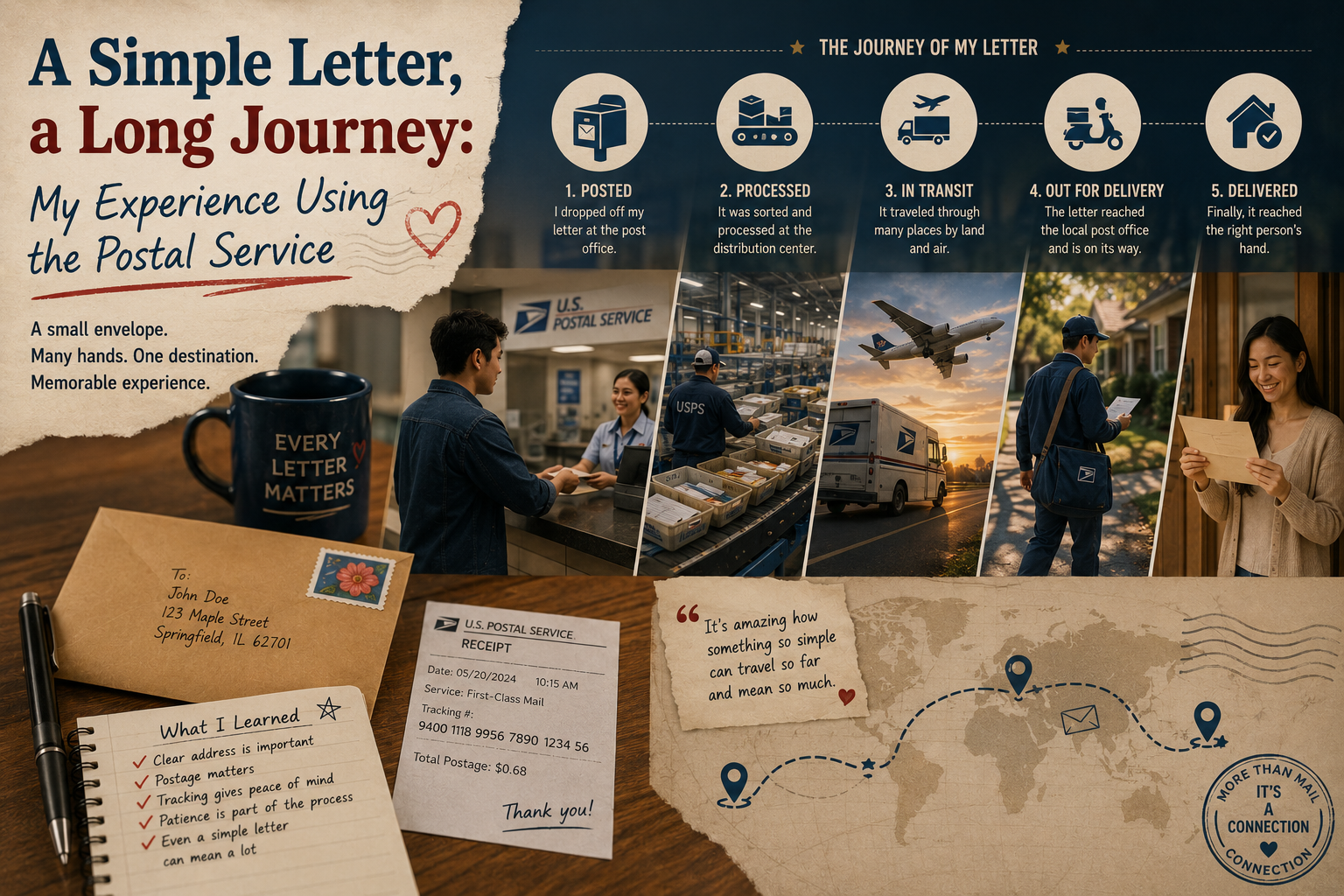
There was a time when sending a letter was one of the most ordinary forms of communication. Today, however, most conversations happen through smartphones, email, and social media. A message can cross thousands of kilometers in seconds, making traditional mail seem slow and almost forgotten.
Recently, I decided to send a physical letter through the postal service. It was not a particularly large package or complicated shipment. It was simply an envelope containing a few pages of personal writing. Yet, the experience made me realize that even a simple letter can have a surprisingly long journey.
Why I Chose Traditional Mail
The decision to send a physical letter was intentional. I could have typed the message and sent it digitally, but I wanted the recipient to receive something tangible.
There is a different feeling when someone receives a handwritten or printed letter. It represents more than information. Someone has taken the time to write or prepare it, put it into an envelope, address it, and physically send it.
That sense of effort was the main reason I chose traditional mail.
Preparing the Letter
My journey began at home.
I carefully prepared the contents and checked the pages before placing them inside the envelope. I wanted to make sure everything was complete and in the correct order.
Then I focused on the envelope.
I wrote the recipient’s name and address clearly, including the city and postal code. I also added my own information as the sender.
This was one of the first lessons I learned: an accurate address is essential.
A small mistake in a street name or postal code could potentially create a delivery problem. Before leaving home, I checked the information more than once.
Visiting the Post Office
When I arrived at the post office, I initially felt slightly unsure about what to do.
There were several customers waiting for different services, and I realized that postal offices handle much more than ordinary letters.
When it was my turn, I explained to the staff that I wanted to send a letter to another city.
They asked about the destination and explained the available delivery options.
I appreciated the assistance because I did not know exactly which service would be most appropriate.
Choosing the Delivery Service
The staff explained that delivery services can differ based on factors such as speed, destination, and available features.
I considered how important the letter was and whether I needed tracking information.
After discussing the options, I chose a service that suited my needs.
This part of the experience taught me that it is better to explain your priorities rather than simply asking for the cheapest option. If a letter is important, additional features may be worth considering.
The Moment the Letter Left My Hands
After paying the required fee, I handed over the envelope.
That moment felt strangely significant.
Until then, the letter had been sitting safely in my home. Now it was officially part of the postal system.
I received a receipt as confirmation of the transaction. I kept it carefully because it contained information that could be useful later, particularly if the service included tracking.
The letter was now on its own journey.
Imagining the Journey
One of the most interesting parts of the experience was imagining where the letter might go.
It would not simply travel directly from the post office to the recipient’s house. It would pass through various stages of the postal network before eventually reaching its destination.
That thought made the process feel surprisingly fascinating.
A simple envelope could travel through sorting facilities, transportation networks, and local delivery routes before finally being placed in someone’s hands.
In a digital world, we rarely think about the physical journey behind communication.
The Waiting Game
Then came the hardest part: waiting.
I could not simply refresh a screen and see the recipient reading the letter.
If tracking was available, I could check its progress, but even then, I had to be patient.
The waiting period made me appreciate how different traditional mail is from modern communication. Digital messages emphasize speed. Physical letters emphasize anticipation.
There was something almost nostalgic about waiting for confirmation that the letter had arrived.
When the Letter Finally Arrived
Eventually, I learned that the letter had reached its destination.
The sense of relief was immediate.
Something so small had traveled from my hands to another person’s hands, crossing distance through a system that has existed in various forms for generations.
The recipient’s response made the effort feel worthwhile.
The letter had done exactly what I wanted it to do: deliver a personal message in a physical form.
What I Learned
The experience taught me several practical lessons.
First, always check the address carefully. Second, choose a delivery service based on your actual needs rather than price alone. Third, keep your receipt until you know the letter has arrived.
Most importantly, I learned to appreciate patience.
Traditional mail may not compete with digital communication when it comes to speed, but speed is not always the most important part of communication.
Why Letters Still Matter
A physical letter can create a different emotional experience.
It can be stored in a drawer, placed in a box, or kept as a reminder of a particular moment. Years later, someone can still hold the same envelope and read the words inside.
That permanence is difficult to replicate with an ordinary digital notification.
Final Thoughts
My experience using the postal service began with something extremely simple: a letter and an envelope.
Yet the journey taught me about preparation, accurate addressing, delivery services, patience, and the value of physical communication.
The letter itself was small, but its journey was much larger than I initially imagined.
In a world where messages travel instantly, sending a physical letter may seem unnecessary. But sometimes, the slower journey is exactly what makes the message special. A simple envelope can carry not only words, but also time, effort, anticipation, and a personal connection that lasts long after delivery.