From Writing the Address to Getting the Receipt: My Post Office Experience
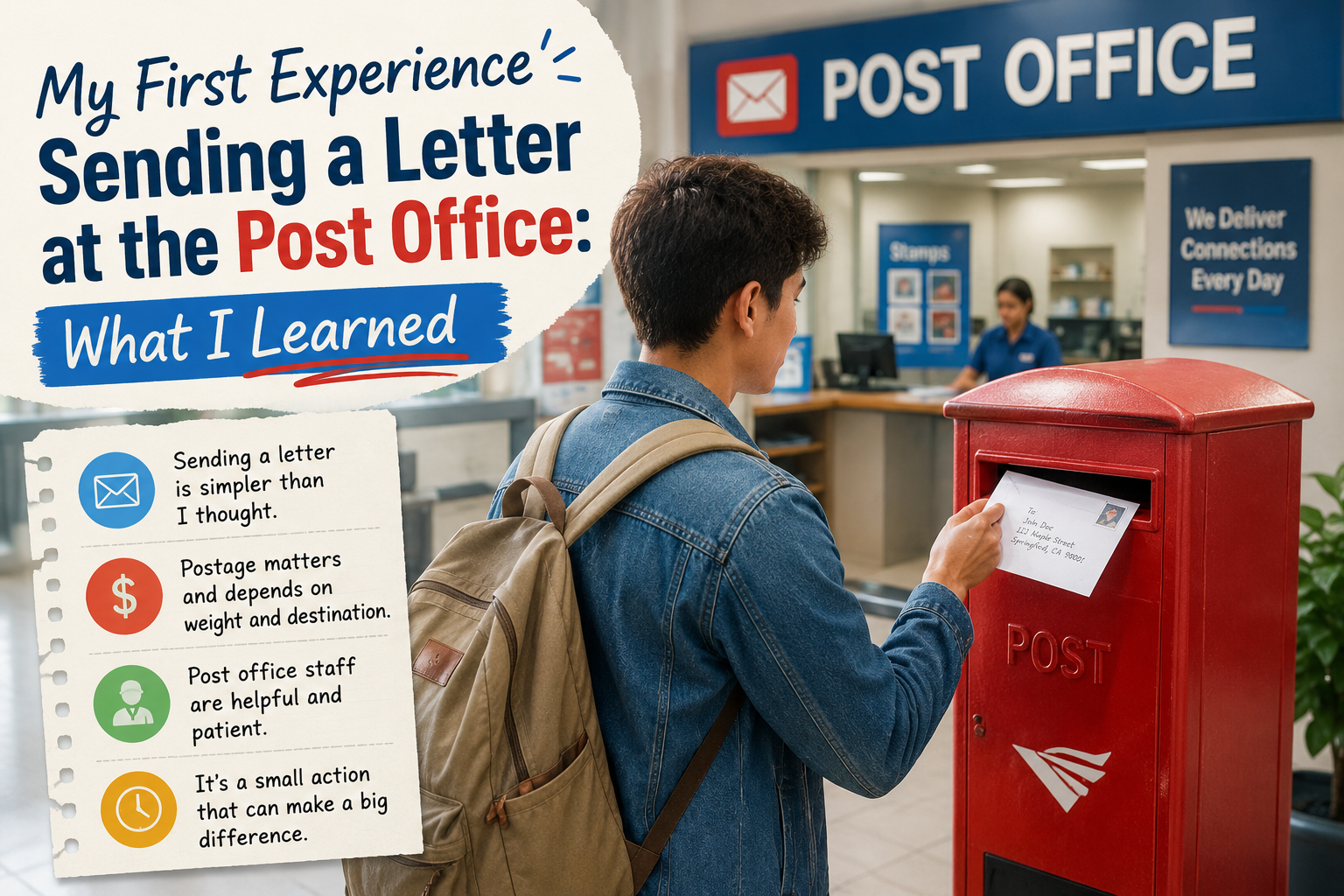
In a world dominated by instant messages, email, and digital notifications, sending a physical letter can feel like stepping into another era. Most people can communicate with someone across the world in seconds, so the idea of writing an address on an envelope, visiting a post office, and waiting for a letter to arrive may seem old-fashioned.
Yet, that was exactly what I decided to do. I needed to send an important personal letter to someone in another city, and instead of using a digital platform, I wanted to experience traditional mail. What seemed like a straightforward task turned into a surprisingly interesting experience, from preparing the envelope at home to receiving the final postal receipt.
Preparing the Letter
The process began at my desk at home. I wrote the letter carefully, making sure the message was clear and easy to read. Because I was sending an actual piece of paper rather than an email, I found myself paying more attention to every sentence.
After finishing the letter, I folded the pages neatly and placed them inside an envelope. Then came the part I initially thought would be the easiest: writing the address.
It turned out that addressing an envelope deserves more attention than I expected.
Writing the Address Correctly
I carefully wrote the recipient’s name and address on the front of the envelope. I included the street or local address, city, postal code, and other relevant information needed for delivery.
I also added my own address as the sender.
The postal code received particular attention because it helps identify the destination area. I checked the numbers several times to make sure I had not accidentally switched or omitted anything.
This simple process reminded me that traditional mail depends heavily on accurate information. With a digital message, an incorrect email address might produce an immediate error notification. With physical mail, an addressing mistake can potentially create delays or even prevent successful delivery.
Getting Ready for the Post Office
Once the envelope was prepared, I put it somewhere safe and headed to the post office.
Before leaving, I checked that the envelope was properly sealed and that the writing was clear. I also made sure that nothing important was missing from the letter.
At this point, I realized that preparation is probably the most important part of sending traditional mail. A few minutes spent checking everything at home could prevent unnecessary problems later.
Arriving at the Post Office
When I arrived, the post office was already serving several customers. People were there for different reasons, including sending packages, handling documents, and purchasing postal services.
I waited for my turn and observed how the staff handled each customer’s request.
When it was finally my turn, I explained that I wanted to send a personal letter to another city. The staff asked about the destination and checked the envelope.
I appreciated that I did not have to know every detail about postal services beforehand. The staff could explain the available options and help me choose one that matched my needs.
Choosing the Right Service
One of the things I learned was that mailing a letter is not always about simply paying for a stamp and leaving.
Depending on the destination and service available, there can be different delivery options. Some may focus on standard delivery, while others can provide additional features such as tracking or faster handling.
I explained that the letter was important but did not necessarily require an expensive premium service. The staff explained the options, and I selected the service that seemed appropriate.
This was a useful lesson because I realized that asking questions can make the process much easier, especially for someone who rarely uses postal services.
Paying and Getting the Receipt
After the service was selected, I paid the required fee. The staff processed the letter and gave me a receipt.
That small piece of paper suddenly felt important.
The receipt provided confirmation that I had completed the transaction. If tracking information was associated with the selected service, the receipt could also provide useful details for following the shipment.
I carefully put it in my wallet instead of throwing it away.
It was a simple action, but it made me realize that keeping documentation is always a good habit when sending something important.
The Experience of Waiting
After leaving the post office, the letter was officially on its journey.
Unlike sending a message through a smartphone, I could not immediately see whether the recipient had opened it. There was a period of waiting.
Surprisingly, I enjoyed that part of the experience.
The delay created a sense of anticipation. I wondered when the letter would arrive and what the recipient’s reaction would be.
It reminded me that communication does not always have to be instant to be meaningful.
Lessons I Took Away
The experience taught me several practical lessons.
First, write the recipient’s address carefully and completely. Small details can make a significant difference.
Second, check the envelope before leaving home. Make sure the letter is properly enclosed and the information is readable.
Third, ask postal staff for guidance if you are unsure about the available services. You do not need to be an expert before visiting the post office.
Fourth, keep your receipt, especially when sending something important or when the service includes tracking.
Finally, I learned that traditional mail can provide a different kind of satisfaction. There is something personal about holding a message that someone has physically written and prepared.
Why the Experience Was Worth It
My visit to the post office was not complicated, but it was memorable. The entire process—from writing the address to receiving the receipt—made me appreciate how much thought goes into something that can seem as simple as sending an envelope.
Digital communication will continue to be faster and more convenient for everyday conversations. However, physical letters still have a special place for personal messages, formal correspondence, and moments when you want to make communication feel more deliberate.
Final Thoughts
Sending my letter through the post office gave me more than a delivery experience. It taught me to pay attention to details, prepare information carefully, ask questions when necessary, and keep important documentation.
Most importantly, it reminded me that communication does not always need to be immediate.
Sometimes, writing a message by hand, addressing an envelope, visiting a post office, receiving a receipt, and waiting for the delivery can make the message feel more meaningful. In a world where almost everything happens instantly, that little bit of patience can be a refreshing experience.