My First Experience Sending a Letter at the Post Office: What I Learned
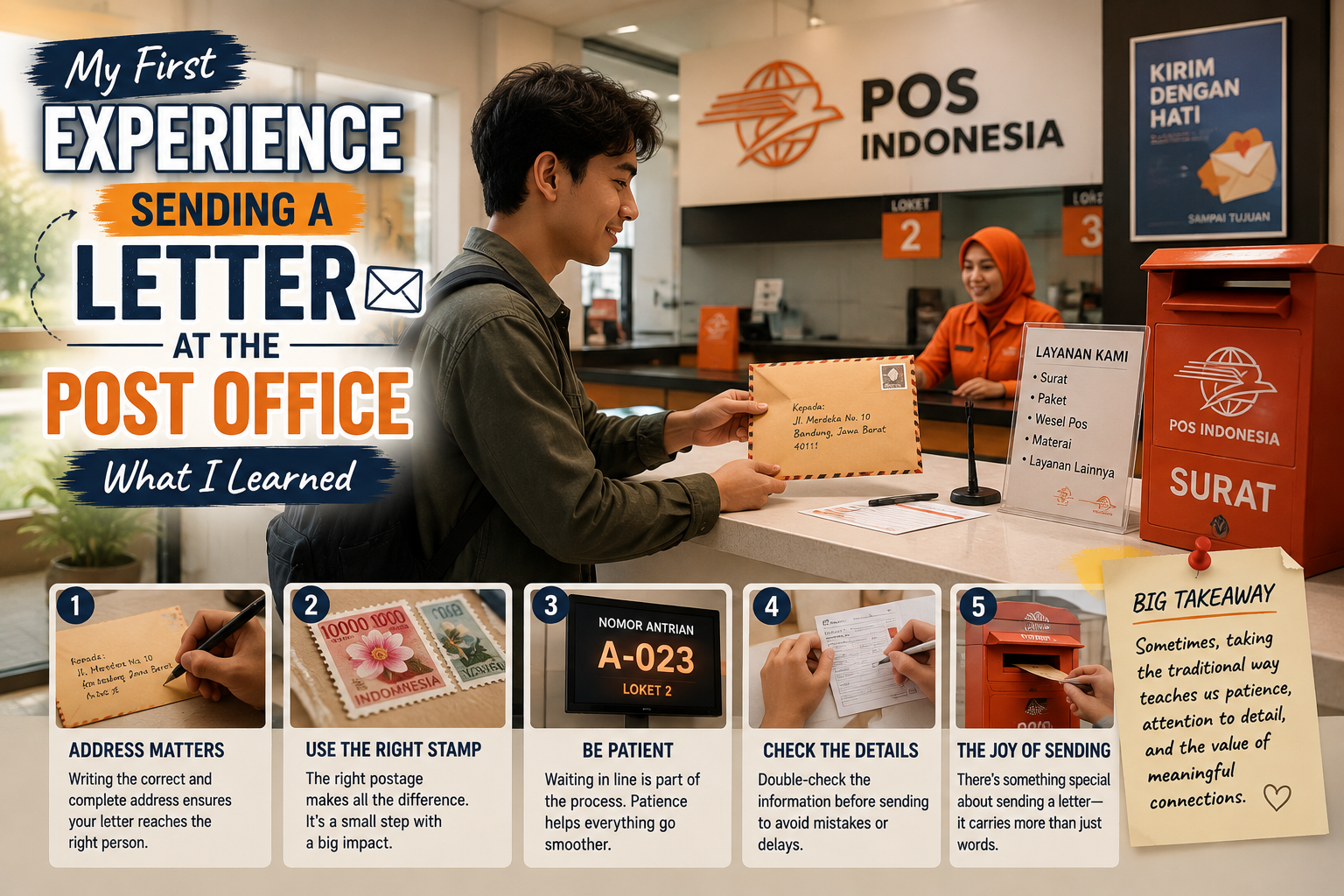
Sending a letter through the post office may seem like a simple task. Write the message, put it in an envelope, add the address, and take it to the nearest post office. However, my first experience taught me that there is more to mailing a letter than simply putting an envelope into a mailbox.
In an age when emails, instant messaging, and video calls are part of everyday communication, sending a physical letter feels almost nostalgic. My first visit to the post office reminded me that traditional mail still has its own charm, especially when the message is personal or important.
Preparing the Letter at Home
My experience began at home. I wanted to send a personal letter to someone who lived in another city. Rather than sending a message through a phone or email, I decided that a handwritten letter would feel more meaningful.
I carefully wrote the message on several sheets of paper and checked it a few times before putting it into an envelope. One of the first things I realized was that the physical format required more attention than sending a digital message.
With email, a small typing mistake can often be corrected immediately. With a handwritten letter, I had to make sure the writing was clear and the information was correct before sealing the envelope.
Checking the Address Carefully
One of the most important lessons from the experience was the importance of writing the recipient’s address correctly.
I made sure to include the recipient’s name, street or neighborhood information, city, postal code, and other relevant details. I also included the sender’s address so the letter could potentially be returned if delivery was unsuccessful.
The postal code was especially important because it helps identify the destination area. I double-checked the spelling of the city and the numbers in the postal code before leaving home.
This small step gave me peace of mind because I knew that an incorrectly written address could potentially cause delays or delivery problems.
My Visit to the Post Office
When I arrived at the post office, I was initially unsure about what I needed to do. There were several services available, and I did not know which one was appropriate for my letter.
Instead of guessing, I asked a staff member for assistance. The staff explained the available mailing options and asked where I wanted the letter delivered.
This was an important lesson: it is perfectly fine to ask questions at the post office. The staff are there to help customers choose the appropriate service.
Choosing a Delivery Service
I learned that postal services can offer different delivery options depending on the destination, speed, tracking availability, and other requirements.
For a normal personal letter, I did not necessarily need the fastest or most expensive option. I mainly wanted the letter to arrive safely at its destination.
The staff explained the available choices, and I selected an option that suited my needs and budget.
Before paying, I also asked whether the shipment would have a tracking number. This helped me understand how I could check the progress of the delivery if tracking was included with the service.
The Importance of the Postal Receipt
After completing the payment, I received a receipt. At first, I thought it was simply proof of payment, but I soon realized that keeping it was a good idea.
Depending on the service selected, the receipt may contain useful information about the transaction or shipment. If a tracking service is included, relevant tracking information can be especially valuable.
I kept the receipt until I was confident that the letter had reached its destination.
Waiting for the Letter to Arrive
The most interesting part of the experience came after leaving the post office: waiting.
Unlike instant messages, physical mail does not arrive immediately. There is something surprisingly exciting about knowing that a handwritten message is traveling through a postal network toward another person.
I found myself wondering where the letter was and when the recipient would open it.
That waiting period also taught me to appreciate the effort involved in traditional mail delivery. A letter has to travel through several stages before reaching the recipient.
What I Learned From the Experience
My first experience sending a letter taught me several practical lessons.
First, always check the address carefully. A complete and accurate address can help reduce the possibility of delivery problems.
Second, ask postal staff when you are unsure about a service. There is no need to understand every postal option before visiting the post office.
Third, keep your receipt. It can provide useful information and may be important if you need to reference the transaction later.
Finally, I learned that sending a physical letter can be more personal than digital communication. A handwritten message requires time, effort, and intention.
Why Traditional Letters Still Matter
Modern communication is undoubtedly faster. A message can cross the world in seconds, while a physical letter may take considerably longer.
Yet traditional mail has a unique quality. A handwritten letter is something tangible. It can be opened, held, stored, and revisited years later.
For special occasions, personal messages, formal correspondence, or simply reconnecting with someone, a physical letter can feel surprisingly meaningful.
Final Thoughts
My first experience sending a letter at the post office was much more educational than I expected. What initially seemed like a routine errand became an opportunity to learn about addressing mail, selecting a delivery service, keeping important receipts, and appreciating the process behind traditional postal communication.
The experience also reminded me that technology does not necessarily make older forms of communication irrelevant. While digital messages are convenient and fast, physical letters offer something different: a tangible connection between sender and recipient.
If you have never sent a letter through a post office before, the process may seem unfamiliar at first. But with a correctly prepared envelope, an accurate address, and a willingness to ask questions, it can be a surprisingly simple—and memorable—experience.